
A softer, more thoughtful approach to a piece of clothing most women have been getting wrong for years.
There is a quiet kind of discomfort that many women learn to live with. The strap that slips off the shoulder mid-morning. The underwire that presses just a little too firmly by lunch. The faint pink mark across the back of the ribs at the end of a long day. These small inconveniences become so familiar that we stop noticing them, until one afternoon we slip into a bra that actually fits and remember how the body is meant to feel.
Finding that bra is not about luck. It is not about a fitting room with mirrors lit from every angle, and it is certainly not about a number sewn into a label. It is about learning to listen to your body, understanding a few simple measurements, and recognizing what a true fit feels like.
This is the quiet guide. No jargon, no pressure. Just the things every woman deserves to know.
Why So Many Women Are Wearing the Wrong Size
Lingerie professionals have agreed on something surprising for years: a remarkable number of women, by many estimates the majority, are wearing a bra that does not truly fit them. The research on bra sizing consistently shows that band sizes tend to be chosen too large and cup sizes too small, often by more than one size on each.
The reasons are gentle and human. Bodies change. Brands size differently. Sizing systems can feel mysterious. And we are rarely taught what a good fit actually looks like. There is no shame in this. There is only the quiet relief that comes from finally getting it right.
What a Bra That Truly Fits Feels Like
Before we measure anything, start with the feeling. A bra that fits should disappear into your day. You should not be tugging at it. You should not be aware of it. The band should hold you firmly without pinching. The cups should hold your breasts entirely, not pressing, not gaping. The straps should rest gently on your shoulders without bearing any real weight.
If you can forget you are wearing it, you have found the right one.
How to Measure Yourself at Home
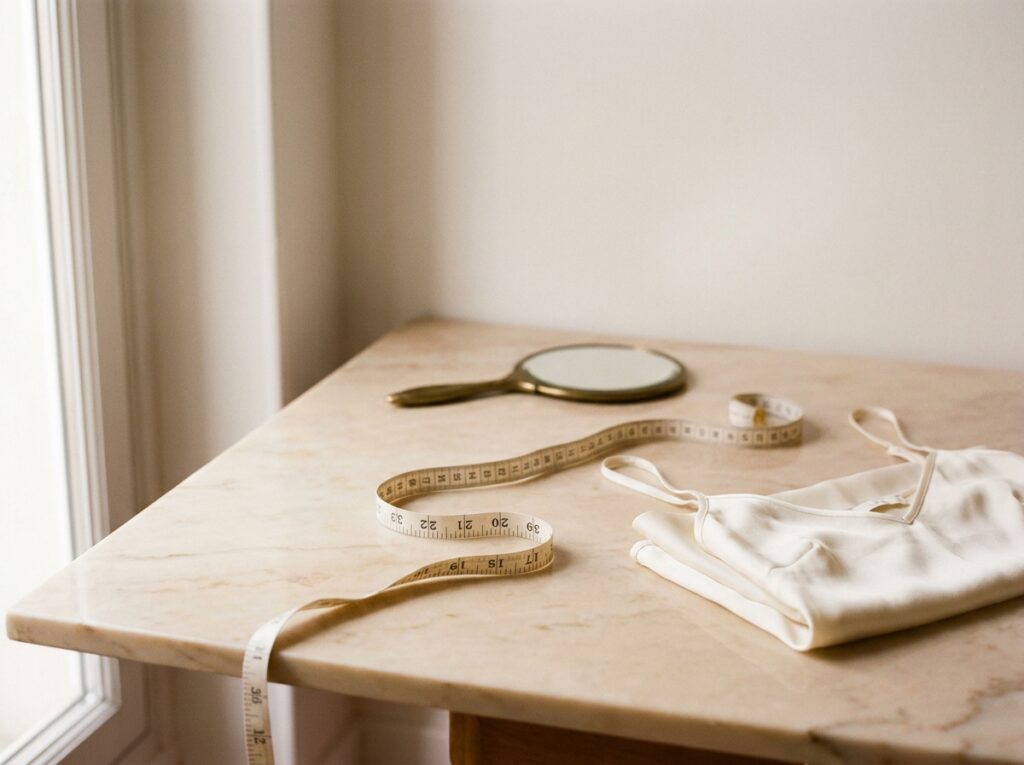
You will need a soft measuring tape, a mirror, and a few quiet minutes. Wear a thin, non-padded bra, or none at all if you prefer. Stand naturally, shoulders relaxed.
1. The Band Measurement
Wrap the tape around your ribcage, just beneath your bust. Keep it parallel to the floor and snug, but not tight. Read the number in inches. If it is an odd number, round to the nearest even one. This is your band size.
2. The Bust Measurement
Now wrap the tape loosely around the fullest part of your bust, again keeping it parallel to the floor. Do not compress. Let the tape rest gently.
3. The Cup Size
Subtract the band measurement from the bust measurement. The difference, in inches, gives you your cup size:
- 1 inch → A cup
- 2 inches → B cup
- 3 inches → C cup
- 4 inches → D cup
- 5 inches → DD (or E in UK sizing)
- 6 inches → DDD or F
- 7 inches → G, and so on
These numbers are a starting point, not a verdict. Sister sizing, which we will come to in a moment, helps you fine-tune.
The Five Quiet Fit Checks
Once you have found a bra you like, here are five small things to check before deciding it is truly the one.
The Band
The band should sit parallel to the floor across your back, never riding up. Around eighty percent of a bra’s support comes from the band, not the straps. If the back is hiking upward when you raise your arms, the band is too loose.
The Underwire
If your bra has wires, they should follow the natural fold beneath your breast. They should not poke into breast tissue, nor sit on top of it. Wires that pinch under the arms usually mean the cup is too small.
The Cups
Your breasts should fill the cups completely, with no spillage at the top and no empty space at the bottom. A small wrinkle in the fabric means the cup is slightly too big. A line of pressure across the breast means it is slightly too small.
The Centre Gore
That small piece of fabric between the cups should sit flat against your sternum. If it lifts away from your chest, the cups are almost certainly too small.
The Straps
The straps should rest comfortably without digging in. You should be able to slide one finger underneath without difficulty. If the straps are doing all the work, the band is too loose.
Common Fit Problems and What They Quietly Reveal
Most fit problems have one of a handful of clear causes. Here is a gentle guide to reading them.
- The band rides up your back — the band is too big. Try a smaller band size.
- The straps slip off your shoulders — usually a band issue, not a strap issue.
- Spillage at the top of the cups — try a larger cup size.
- Wrinkling or gaping cups — try a smaller cup size or a different style.
- Underwire digging in under the arm — the cup is most likely too small for your breast tissue.
- Centre gore floating away from the chest — almost always a sign the cup is too small.
Sister Sizing: A Small Trick That Changes Everything
Bra sizes are connected. If your size feels almost right but not quite, you can move to a sister size — the same cup volume carried on a different band.
To go down a band, keep the cup volume the same by going up a cup letter (34C becomes 32D). To go up a band, go down a cup letter (34C becomes 36B). This little trick helps you find your fit across brands that size differently, which nearly all of them do.
When to Ask for a Professional Fitting
There is no shame in measuring yourself, and there is no shame in asking for help. A good fitting, at a specialist lingerie boutique or with a brand that takes fit seriously, can be transformative, especially after a major life change such as weight loss or gain, pregnancy, or breastfeeding.
A handful of brands have built their reputations on fit and offer thoughtful, judgement-free consultations either in person or online. Bravissimo is widely respected for fuller-bust fitting, with stores across the United Kingdom and a careful online fit service. ThirdLove offers a quiet, well-built online fit quiz that has helped many women find their first half-cup size. And for the technically curious, the Wikipedia entry on bra sizing is surprisingly thorough and worth the read.
Where to Begin
If you are starting from scratch, three good bras are usually enough: a soft everyday t-shirt bra in a colour close to your skin, a wireless bra for quiet days at home, and something that makes you feel beautiful, whatever that means to you. Build slowly. Replace gently. A well-cared-for bra typically lasts six to nine months of regular wear, sometimes longer when rotated and washed by hand.
A Final, Gentle Note
Finding a bra that truly fits is not a small thing. It changes the way clothes drape on your body, the way you carry your shoulders, the way you move through a day. It is one of those quiet acts of self-respect that no one else sees, but that you feel every time you get dressed.
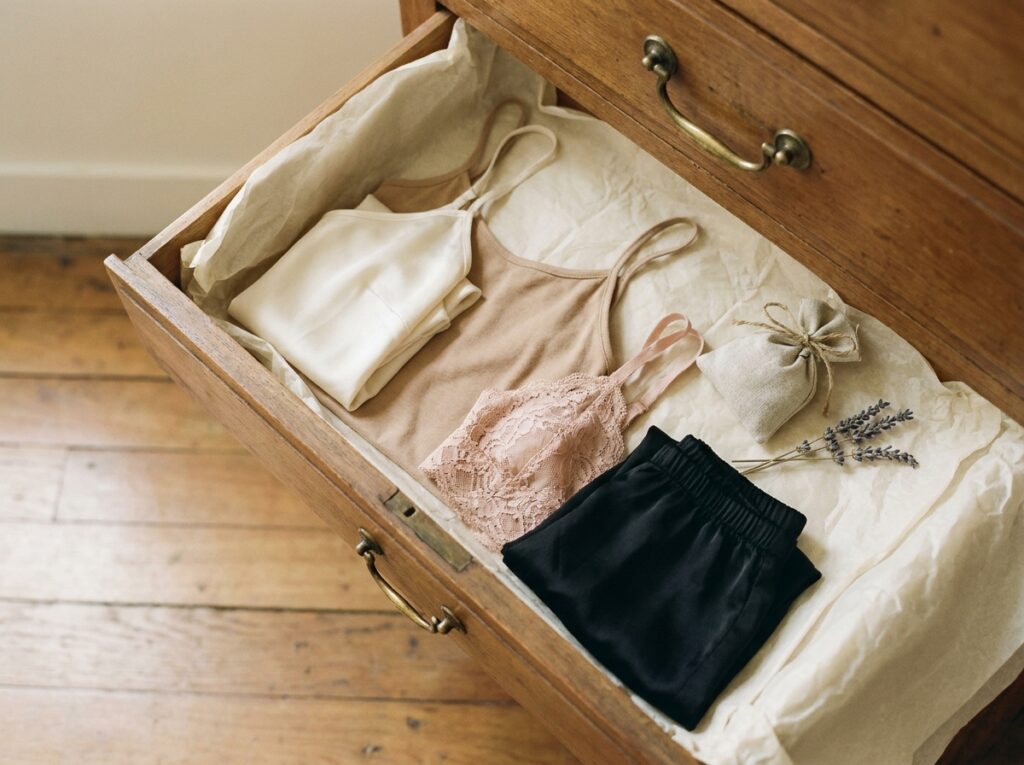
You deserve to feel comfortable in your own clothes. You always did.